
Top physiotherapy home exercises to boost recovery
- 7 hours ago
- 8 min read
TL;DR:
Choosing exercises suitable for your recovery stage and medical condition is essential for safety and progress.
Lower body, upper body, core, and flexibility routines should be tailored, monitored, and adapted over time.
Professional guidance is crucial when experiencing persistent pain, swelling, or other warning signs.
Finding safe, effective physiotherapy exercises to do at home can feel genuinely overwhelming, especially when you are recovering from surgery, managing a musculoskeletal injury, or navigating the physical demands of pregnancy. The wrong exercise at the wrong time can set you back weeks. The right one, performed correctly, can accelerate your recovery in ways that surprise even seasoned patients. This guide walks you through how to select appropriate exercises, then offers a practical, expert-informed list covering lower body, upper body, core, and flexibility work. Each section includes modifications for pregnancy and clear guidance on when to seek professional input.
Table of Contents
Key Takeaways
Point | Details |
Personalised selection is key | Choosing exercises that fit your stage of recovery or pregnancy ensures both safety and effectiveness. |
Core and flexibility matter | Lower body, upper body, and stretching routines work together for total rehabilitation and daily comfort. |
Know when to seek help | Professional advice is crucial if you experience pain, don’t progress, or need adaptations for special circumstances. |
Consistency drives results | Regular, correctly performed exercises support faster healing and mobility. |
How to choose the right physiotherapy exercises for home use
Before you attempt a single movement, you need to assess where you are in your recovery or pregnancy. A newly post-operative knee is not in the same category as a knee three months into rehabilitation. Similarly, a first-trimester pregnancy carries different considerations than the third trimester. Rushing this step is the most common mistake people make.
When screening exercises for your situation, check the following:
Your stage of recovery or pregnancy: Early-stage recovery demands gentle, low-load movements. Later stages allow progressive loading.
Contraindications: Certain conditions, such as recent fractures, deep vein thrombosis, or placenta praevia in pregnancy, rule out specific exercises entirely.
Pain response: Mild discomfort during exercise can be normal. Sharp, shooting, or worsening pain is not.
Equipment and space: Some exercises require resistance bands or a stable chair. Confirm you have what you need before starting.
Professional clearance: If you are post-surgery or have a complex diagnosis, always confirm your exercise list with your physiotherapist before beginning.
Using rehabilitation exercise guidance from a credible source helps you cross-reference movements against your diagnosis. The Chartered Society of Physiotherapy provides patient-friendly resources that are evidence-based and regularly updated.
For those new to this process, beginner physiotherapy tips can help you build confidence before tackling a full routine. And if you want a structured framework, a step-by-step physiotherapy guide offers a sequenced approach to full recovery.
Personalised physiotherapy plans enhance both safety and effectiveness, which is why a one-size-fits-all approach rarely delivers optimal results. Your programme should evolve as you improve.
Pro Tip: Keep a simple exercise diary. Note which movements felt comfortable, which caused discomfort, and how you felt the following morning. This information is invaluable when reviewing progress with your physiotherapist.
Essential lower body physiotherapy exercises for strength and stability
Lower body strength underpins nearly every activity you perform daily, from standing up from a chair to climbing stairs. After injury or during pregnancy, the muscles around your hips, knees, and ankles often weaken quickly. These exercises target those areas safely.
Bridging: Lie on your back with knees bent and feet flat. Slowly lift your hips until your body forms a straight line from shoulders to knees. Hold for three seconds, then lower. This activates the glutes and hamstrings without loading the spine.
Mini squats: Stand with feet hip-width apart, holding a stable surface for support. Bend your knees to about 30 degrees and return. Avoid deep squats in early recovery or during late pregnancy.
Heel slides: Lying on your back, slowly slide one heel along the bed towards your bottom, bending the knee. Slide it back out. This is particularly useful after knee surgery.
Hip abduction: Lying on your side with legs straight, lift the top leg to about 30 degrees and lower slowly. This strengthens the hip stabilisers, which are critical for balance and gait.
Always perform lower body exercises on a firm, non-slip surface. If you feel unstable during standing exercises, use a wall or sturdy chair for support.
For pregnancy, bridging and heel slides are generally well tolerated throughout most trimesters. Mini squats can be adapted by reducing range of motion and using a support. Hip abduction lying on your side becomes more comfortable with a pillow between your knees in later pregnancy.
Lower body exercises reduce risk of further injury and aid joint health, making consistency with these movements genuinely protective. Monitor for swelling or increased pain after each session, and reduce intensity if either occurs. For more on starting home physiotherapy safely, additional guidance is available. The NHS also provides useful back pain exercises that complement lower body work.
Upper body and core physiotherapy exercises for daily function
Upper body and core strength directly affects your ability to lift, carry, and maintain good posture throughout the day. After a shoulder injury, arm surgery, or during pregnancy when your centre of gravity shifts, these muscles need targeted attention.
Key exercises to include:
Wall push-ups: Stand facing a wall, place your hands at shoulder height and width, and slowly bend your elbows to bring your chest towards the wall. Push back. This builds chest and shoulder strength without the load of a floor push-up.
Rotator cuff strengthening: Using a light resistance band, hold one end with your elbow bent at 90 degrees and rotate your forearm outward against the resistance. This protects the shoulder joint and is essential after rotator cuff injuries.
Gentle shoulder stretches: Bring one arm across your chest and use the opposite hand to apply light pressure. Hold for 20 to 30 seconds. This maintains shoulder mobility and reduces stiffness.
Core activation (abdominal drawing-in): Lying on your back with knees bent, gently draw your lower abdomen inward without holding your breath. Hold for five seconds. This activates the deep stabilising muscles of the spine.
Targeted upper body exercises are essential for full rehabilitation after arm injury, particularly when returning to work or daily tasks that involve reaching and carrying.
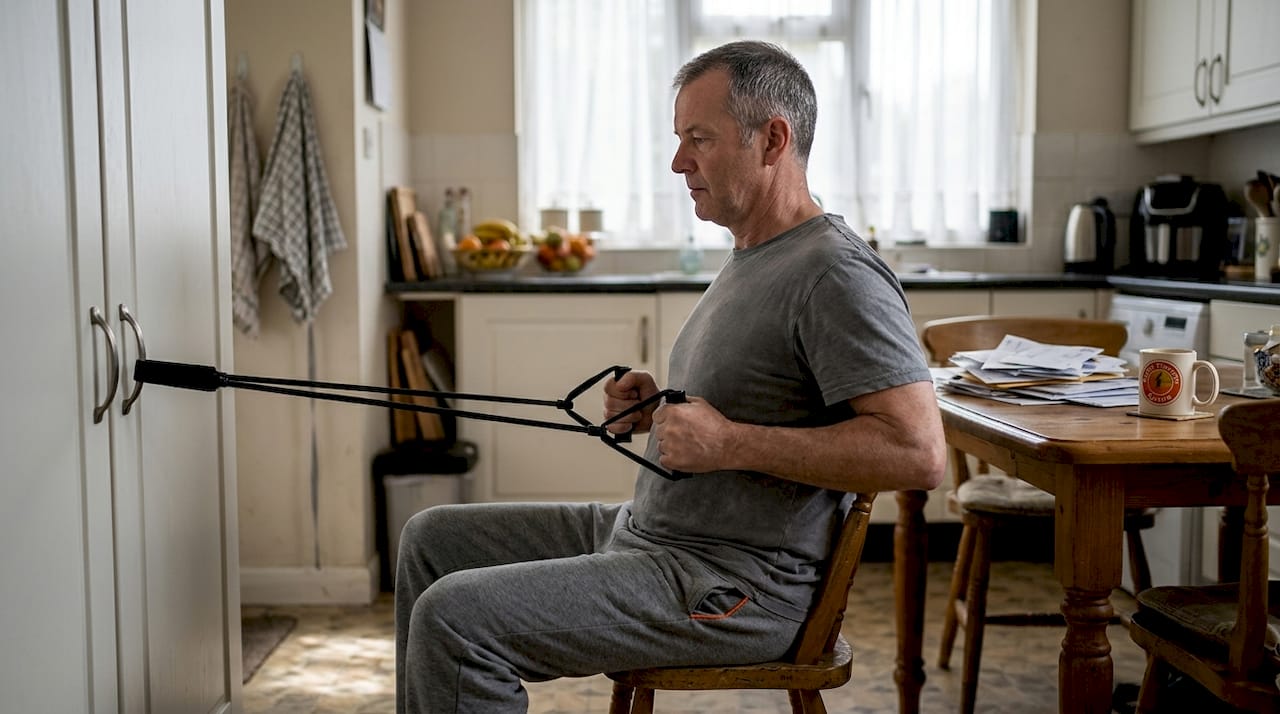
For pregnancy, wall push-ups and core activation exercises are generally safe and beneficial. Avoid lying flat on your back for extended periods after the first trimester. Pilates for rehabilitation offers an excellent complement to these exercises, particularly for core work. You can also explore joint health exercises from Versus Arthritis for additional upper body options.
Pro Tip: Engage your core gently before and during every exercise, not just core-specific ones. This protects your lower back and improves the quality of every movement you make.
Stretching and flexibility routines for improved mobility
Strength is vital, but flexibility and suppleness play an equally important role in recovery. Stiff muscles and joints limit your range of motion, increase your risk of re-injury, and make daily activities feel harder than they should.
Consistent stretching can improve mobility and decrease pain by up to 30%, making it one of the highest-return activities you can add to your daily routine. Even ten minutes each morning makes a measurable difference over weeks.
Here is a comparison of key stretches across different recovery stages and conditions:
Stretch | Best for | Pregnancy safe | Notes |
Hamstring stretch (supine) | Post-surgery, back pain | Yes (early stages) | Avoid if sciatic pain worsens |
Chest opener (standing) | Shoulder recovery, posture | Yes | Excellent for pregnancy posture |
Cat-camel (all fours) | Spinal stiffness, back pain | Yes | Gentle and well tolerated |
Side bends (seated) | Hip and spinal mobility | Yes | Use a chair for stability |
The cat-camel is performed on all fours, alternately arching and rounding your back slowly. It mobilises the entire spine and is one of the most universally recommended movements in physiotherapy. The chest opener involves clasping your hands behind your back and gently lifting your arms while opening your chest. This counteracts the forward-rounding posture that both desk work and pregnancy can create.
For a broader view of how stretching fits into your overall programme, types of physiotherapy techniques explains the different approaches available. The NHS also offers flexibility exercise guidance that is straightforward and practical.
When to seek advanced guidance or modify your home routine
Even with a solid home routine, there are times when professional support is essential. Recognising those moments early prevents minor setbacks from becoming serious problems.
Red flags that require immediate professional input:
Severe or sudden increase in pain during or after exercise
Swelling that does not reduce within 24 hours
Dizziness, shortness of breath, or chest tightness
Numbness or tingling that is new or worsening
Any fall or new injury during exercise
Reduced foetal movement during pregnancy
Scenario | Recommended action |
Mild muscle soreness after exercise | Continue, reduce intensity slightly |
Pain that persists more than 48 hours | Pause and consult your physiotherapist |
New swelling or bruising | Stop and seek assessment |
No progress after 4 to 6 weeks | Request a review and plan adjustment |
Post-surgical complication signs | Contact your surgeon or GP immediately |
Professional support is critical for complicated cases or persistent pain, and delaying that support rarely saves time in the long run. It almost always costs more time.
If you are unsure how to prepare for an appointment, preparing for physiotherapy sessions provides a clear checklist. If clinical language is confusing you, a physiotherapy terminology guide explains common terms in plain language. The NHS also provides reliable NHS physiotherapy advice for understanding what to expect from treatment.
Why safe, tailored home exercise outweighs generic routines
Generic exercise lists circulate endlessly online, and many of them are not wrong exactly, they are just incomplete. They cannot account for your surgical history, your current pain levels, your pregnancy stage, or the specific muscle imbalances that developed during your injury. That gap between general and specific is where most home exercise programmes fail.
In clinical practice, the recoveries that progress fastest are not those where patients did the most exercises. They are the ones where patients did the right exercises, adjusted regularly as their condition changed. A programme that was perfect at week two may actually hinder progress at week six if it is not updated.
This is the core argument for personalised physiotherapy plans: they are not a luxury, they are the mechanism through which real, lasting recovery happens. Use this article as a starting framework, but treat it as a foundation to build on with professional guidance, not a permanent substitute for it.
Take your next step with expert physiotherapy support
A home exercise programme is a powerful tool, but it works best when it is built on a proper assessment and reviewed by someone who understands your specific condition.
At Parks Therapy Centre, our team has been supporting patients across Bedfordshire and Buckinghamshire since 1986. Whether you need a structured rehabilitation plan, diagnostic imaging referrals to clarify your diagnosis, or simply a professional eye on your current routine, we are here to help. Booking an assessment is straightforward, and our physiotherapists work with you to create a programme that reflects your goals, your timeline, and your life. Visit Parks Therapy Centre to book online or speak with our team directly.
Frequently asked questions
How many repetitions should I perform for each physiotherapy exercise at home?
Begin with 8 to 12 repetitions for each exercise, adjusting based on comfort and progress. Personalisation and progression are key in physiotherapy, so always follow your physiotherapist’s specific advice.
What should I do if an exercise causes pain or discomfort?
Stop the exercise immediately and consult a professional, as pain is a sign that something may not be right. Professional support is critical for persistent or worsening pain.
Can I use this list for pregnancy and postpartum recovery?
Yes, but ensure each exercise is pregnancy-safe and adapt movements as recommended by a physiotherapist. Professional guidance ensures exercise routines are safe and suitable throughout pregnancy.
How soon after injury or surgery can I start home exercises?
Begin only after clearance from your physiotherapist or surgeon, following their protocol for your specific case. Step-by-step guidance is essential for safe progression after injury or surgery.
Recommended