
24 sessions over 8–12 weeks: UK physiotherapy for knee osteoarthritis
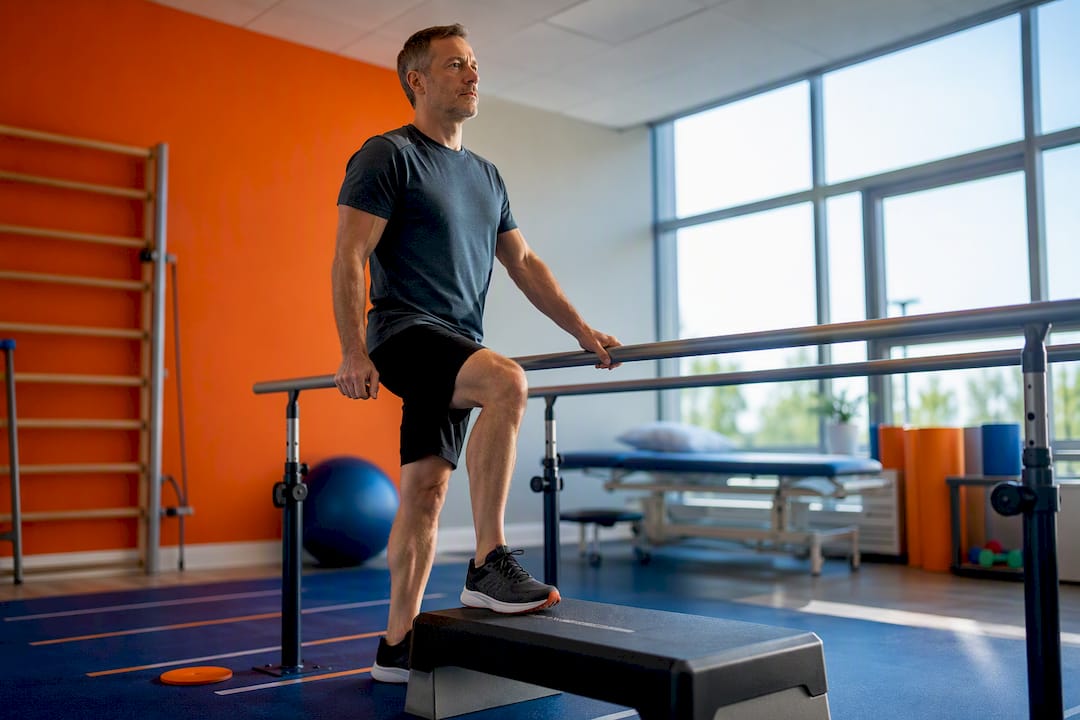
Exercise therapy combined with patient education is the most effective first-line treatment for knee osteoarthritis, outperforming passive treatments for long-term pain relief and function. A physiotherapist’s role is to build a personalised, progressive strengthening and aerobic programme, then supervise how it advances. Passive treatments such as TENS or manual therapy can help in the short term, but they work best as support for an active, loaded exercise plan rather than a replacement for one.
TL;DR:
Exercise programs lasting 8 to 12 weeks with 24 sessions provide the most significant improvements in knee pain and function.
Resistance training targeting the quadriceps, hamstrings, and hip muscles, combined with patient education, is the most effective physiotherapy approach.
Aquatic therapy, balance exercises, and tai chi offer moderate benefits, especially when land-based resistance training is unsuitable.
Passive treatments like TENS, acupuncture, and manual therapy can assist temporarily but do not address the core joint instability or muscle weakness.
Progression should be gradual, focusing on increasing repetitions before resistance, with weekly monitoring and functional tests for safe advancement.
Table of Contents
What is knee osteoarthritis physiotherapy and which interventions actually work?
Knee osteoarthritis physiotherapy centres on three pillars: resistance exercise, aerobic conditioning, and neuromuscular retraining, delivered alongside structured education about the condition. This isn’t a hierarchy where one approach quietly does all the work. It’s a combination, and the EULAR 2023 update on non-pharmacological core management confirms that exercise and education sit at the centre of treatment, to be individualised for each patient rather than issued as a generic leaflet.
Strongest evidence: exercise and education. A systematic review of physiotherapeutic intervention techniques found that resistance training, combined with patient education, produced the most consistent improvements in pain, function, and quality of life. Programmes running 24 sessions across 8 to 12 weeks showed particularly large effects. Neuromuscular training, which retrains how the knee controls movement during everyday tasks like stepping off a kerb, complements the strength work by improving joint stability rather than just muscle bulk.
Brief education sessions, when paired with exercise rather than delivered alone, sharpen short-term pain and function outcomes. Patients who understand why loading the joint helps, rather than harms it, tend to stick with their programme longer.
Moderate support: aquatic therapy, balance work, and tai chi. These approaches carry a real evidence base without quite matching land-based resistance training for long-term structural gains.
Aquatic therapy reduces pain and improves walking ability, according to an umbrella review of non-pharmacological interventions, and the buoyancy of water makes it a genuine option for anyone whose knee is too painful for land-based squatting or stepping.
Balance training reduces the risk of falls in people whose proprioception has been blunted by long-standing joint pain, though it works better as an addition to strength training than a stand-alone fix.
Tai chi improves function and pain modestly, and its slow, controlled movements suit people who find conventional gym-style exercise intimidating.
Adjuncts only: TENS, acupuncture, and manual therapy. These have a place, but that place is narrow. TENS and acupuncture can dampen pain signals for a few hours, which occasionally makes it easier to complete a session of prescribed exercise. Manual therapy, hands-on mobilisation of the joint and surrounding soft tissue, can loosen a stiff knee before loading work begins. None of the three rebuilds the muscle capacity or joint control that actually protects the knee over months and years. Used instead of exercise, rather than alongside it, they leave the underlying problem untouched.
Practical exercise programme: examples, technique and session structure
Knee strengthening exercises for osteoarthritis work best when they target three areas: the quadriceps, the hamstrings and hip muscles, and general aerobic capacity. The exercises below come from clinician-approved sources including the Royal Orthopaedic Hospital’s guidance and reflect what physiotherapists commonly prescribe in the first weeks of a programme.
Warm-up first. Five to ten minutes of gentle movement, walking on the spot, cycling on a stationary bike at low resistance, or marching in place, raises the temperature of the joint tissues and reduces the risk of the sharp pain that puts people off exercise altogether. Cool down the same way, finishing with gentle static stretches held for 20 to 30 seconds.
Inner-range quadriceps. Sit with your leg supported on a rolled towel under the knee, then straighten the knee fully by tightening the thigh muscle, hold for 5 seconds, and lower slowly. This isolates the quadriceps without loading the joint through a full range.
Sit-to-stand. From a firm chair, stand up using your legs rather than your arms, then sit back down with control. This mimics one of the most common daily movements that becomes painful with knee osteoarthritis, making it a useful functional as well as strengthening exercise.
Mini-squat. Bend the knees to no more than 45 degrees, keeping the knees tracking over the toes, then return to standing. Depth matters here: going deeper before the joint is ready tends to provoke pain rather than build strength.
Hamstring bridge. Lying on your back with knees bent, lift the hips off the floor by squeezing the buttocks and pushing through the heels, hold briefly, then lower.
Heel raises. Standing with support if needed, rise onto the balls of the feet, then lower slowly. This strengthens the calf muscles that help absorb shock through the knee during walking.
Step-ups. Using a low step, step up leading with the affected leg, then step back down with control. Progress the step height only once the movement feels stable and pain-free.
Clamshells. Lying on your side with knees bent and stacked, lift the top knee while keeping the feet together, working the hip muscles that support knee alignment.
A typical starting template looks like two to three sessions a week, two to three sets of eight to twelve repetitions per exercise, with a day of rest between sessions in the early weeks. Progression usually means adding repetitions before adding resistance, and increasing resistance before increasing complexity, such as moving from a supported mini-squat to an unsupported one.
Pro Tip: Keep a simple diary noting which exercises you did, how many repetitions, and your pain score before and after. Bring it to your physiotherapy review. It turns a vague “it’s been up and down” into concrete data your clinician can actually use to adjust the plan.
Readers recovering from knee surgery, or preparing for it, will find a more detailed stepwise breakdown in this guide to knee strengthening exercises post surgery, which covers similar movements adapted for a surgical timeline.
How physiotherapists dose and progress exercise safely
Physiotherapists don’t guess at intensity.
The starting point is usually a low load that the patient can complete without provoking pain beyond a manageable level. The NHS inform pain rule is a genuinely useful benchmark here: mild, transient soreness during or shortly after exercise is expected and acceptable, but sharp, burning pain, or pain that hasn’t settled by the following morning, is a signal to scale back rather than push through.
Clinicians typically progress a programme using a few consistent rules:
Increase repetitions first, once the current set feels comfortably achievable across two consecutive sessions.
Add resistance (a band, a weight, a higher step) only after repetitions have plateaued at the upper end of the target range.
Change exercise complexity, moving from double-leg to single-leg work, or from supported to unsupported, once basic strength and control are established.
Reduce load, rather than stopping entirely, if morning stiffness or pain increases noticeably after a session.
Reassess every four to six weeks rather than daily, since knee osteoarthritis symptoms fluctuate day to day regardless of programme quality.
Progress isn’t judged by feeling alone. Clinicians often use simple functional tests, the 30-second sit-to-stand test, a timed up-and-go assessment, or a 40-metre walk, to put a number on improvement rather than relying on subjective impressions. A patient who could manage eight sit-to-stands in 30 seconds at the start of treatment and reaches twelve by week six has an objective marker of progress, independent of how their knee “feels” on any given day.
A quick statistic worth remembering: programmes built on 24 sessions delivered over 8 to 12 weeks produced the largest effect sizes for pain and function in the systematic review of physiotherapeutic interventions. Shorter courses can still help, but that duration and frequency appear to be where the strongest, most consistent gains show up.
Adjunct therapies and aids: what helps and what the evidence says
Adjunct therapies earn their place by making exercise possible, not by replacing it. That distinction shapes how a physiotherapist uses them.
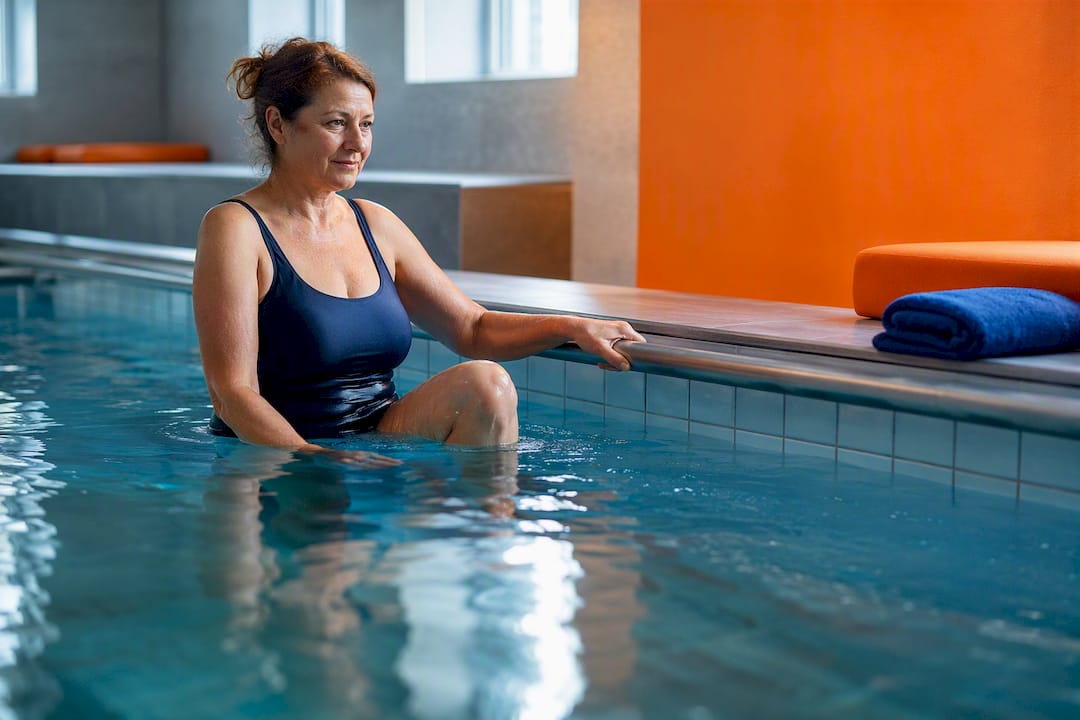
Aquatic therapy has genuinely strong support. Meta-analyses cited in an umbrella review of non-pharmacological interventions show meaningful reductions in pain and improvements in function from water-based exercise. It suits people whose knee is too irritable for land-based squatting, since buoyancy removes much of the compressive load while still allowing resistance work.
Braces, insoles, and walking aids offer symptom relief for some patients, though the benefit varies considerably from one person to the next. A laterally wedged insole might unload one part of the joint for someone with medial compartment osteoarthritis but do nothing for someone else. Walking aids, a stick used on the opposite side to the affected knee, can reduce load during flare-ups without becoming a permanent crutch, literally or otherwise.
Passive modalities sit lower on the list:
TENS can dull pain signals for a few hours, useful before an exercise session but not a treatment in its own right.
Acupuncture shows short-term symptom relief in some studies, with effects that tend to fade without ongoing sessions.
Laser therapy and shockwave treatment have inconsistent evidence and are generally considered supplementary at best.
Manual therapy loosens stiffness and can improve range of movement briefly, making subsequent exercise easier to perform with good technique.
For readers curious how these therapies fit together in a wider rehabilitation plan, this guide to allied therapies for knee recovery covers how acupuncture, podiatry, and massage integrate with an active exercise programme rather than standing apart from it. External resources such as CoolRelief’s guide to hip and knee strengthening also offer useful illustrations of joint-friendly movement patterns.
Self-management: activity, weight, and footwear that support the knee
Physiotherapy works better when the rest of daily life stops fighting against it. Three areas make the biggest practical difference.
Weight management. Even modest weight loss produces measurable improvements in pain and function, according to the umbrella review of non-pharmacological interventions. The knee carries several times body weight during walking, so a small reduction in mass translates into a proportionally larger reduction in joint load with every step taken across a day.
Activity choices. Some movement patterns support the joint; others provoke it unnecessarily.
Favour cycling, swimming, aquatic aerobics, and brisk walking, since these load the joint rhythmically without sharp impact.
Avoid running, jumping, and deep lunges where possible, particularly in the early stages of a programme, as the Cleveland Clinic’s guidance on knee arthritis exercise notes these high-impact patterns tend to aggravate rather than strengthen an arthritic joint.
Break up long periods of standing or sitting, since a stiff joint that hasn’t moved for an hour often feels worse than one that has been gently active throughout the day.
Footwear and home setup. Supportive, cushioned footwear reduces the jarring transmitted up through the joint with each step. At home, a raised chair or toilet seat, a stair rail, and clear walking routes reduce the strain of daily transfers, the exact movements that sit-to-stand exercises are designed to strengthen. Readers wanting broader prevention advice may find this piece on knee injury prevention for active adults a useful companion.
When to see a physiotherapist, GP, or specialist
Most knee osteoarthritis symptoms respond to a structured exercise programme within six to eight weeks, though meaningful change in pain and function sometimes takes longer for people starting from a low baseline. A few signs warrant faster action.
Seek urgent medical review for sudden, significant swelling, redness with warmth suggesting infection, a knee that locks and won’t straighten, or pain accompanied by unexplained weight loss or neurological symptoms such as numbness down the leg.
Book a physiotherapy assessment if knee pain has persisted beyond a few weeks, is limiting daily activities like stairs or standing from a chair, or you’re unsure how to start exercising safely with an arthritic joint.
Escalate to a GP or orthopaedic specialist if a well-run exercise programme, followed consistently for six to eight weeks under the NHS inform pain guidance, produces no improvement in pain or function, since imaging or further investigation may then be appropriate.
Anyone weighing up a surgical pathway alongside conservative treatment may also benefit from reading about prehabilitation before knee surgery, which explains how building strength beforehand tends to shorten recovery afterwards.
How Parkstherapycentre puts the evidence into practice
Guideline recommendations only help if someone translates them into a plan a specific knee, with a specific history, can actually follow. That’s the job physiotherapists at Parkstherapycentre have done since the clinic opened in 1986, across sites in Bedfordshire and Buckinghamshire.
A typical pathway starts with a thorough assessment: joint range of movement, muscle strength, gait, and functional tests such as sit-to-stand capacity, before any exercise is prescribed. From there, the physiotherapist builds a programme that matches the EULAR-backed model of exercise plus education, adjusted for the individual’s baseline fitness, pain levels, and daily demands, rather than issuing a generic sheet of exercises.
What that looks like in practice:
A multidisciplinary team offering physiotherapy alongside podiatry, acupuncture, and massage where an adjunct genuinely supports the plan.
Insurance acceptance alongside private booking, with online scheduling that makes starting treatment straightforward.
Progress tracked through the same functional measures used in the wider research, not just subjective pain scores.
Follow-up reviews to adjust load, address plateaus, and catch flare-ups before they derail months of progress.
A clinician’s note on staying consistent
Knee osteoarthritis rewards patience more than intensity. New exercises will leave your thighs sore for a day or two, and that’s normal, not a sign you’ve done damage. What actually derails people isn’t a bad exercise choice. It’s stopping after two weeks because progress feels invisible.
Small, boring consistency beats sporadic effort every time. Attach your exercises to something you already do daily, brushing your teeth, boiling the kettle, so they stop needing willpower. Keep the diary mentioned earlier. Set targets you can actually hit this week, not the ideal you’re aiming for in six months.
None of this replaces a proper assessment. Everyone’s knee, and everyone’s life, is different enough that a plan built for someone else’s joint rarely fits yours without adjustment. Take this framework to a physiotherapist and ask them to tailor it.
— Ivan
Ready to start your own supervised programme?
Reading about the right exercises is a reasonable first step. Doing them with correct technique, at the right intensity, and with someone adjusting the plan as your knee responds, is what actually moves the needle. That supervision is where Parkstherapycentre earns its place over a printed exercise sheet or a generic app: a physiotherapist watching your mini-squat depth or step-up alignment catches problems no amount of self-monitoring will.
A first appointment at Parkstherapycentre begins with a full assessment of your knee’s strength, range, and function, followed by a personalised programme built around the exercises and progression rules covered above. The clinic accepts most major insurers alongside private bookings, and appointments across its Bedfordshire and Buckinghamshire sites can be arranged online. If you’re ready to turn this guide into an actual plan, visit the Parks Therapy Centre website to check availability and book an initial assessment.
This article is general information, not a substitute for advice from a qualified doctor. Consult a qualified healthcare professional about your own circumstances before acting on anything here.
Sources
Recommended